
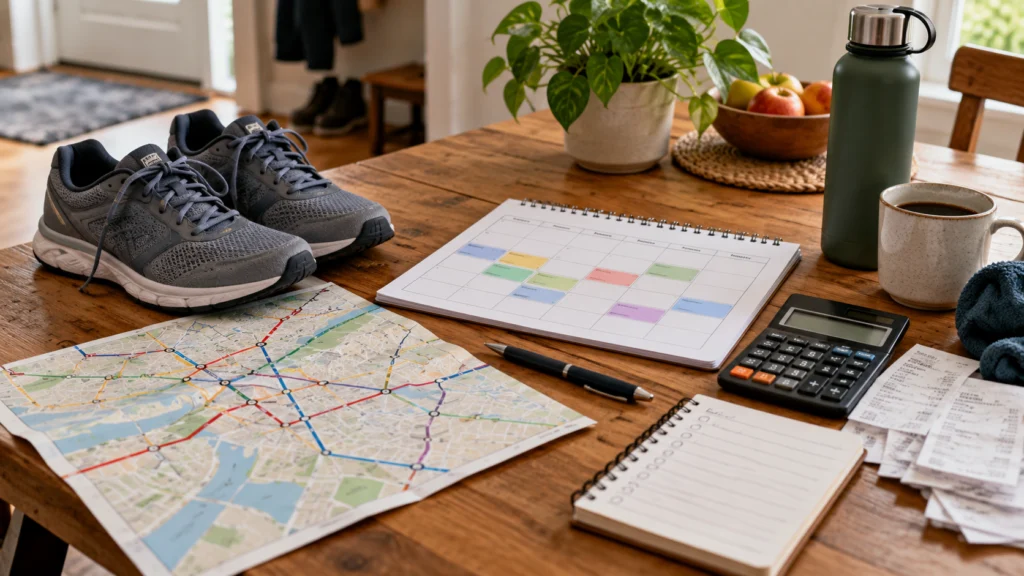
The price of a class or membership is the visible part of staying active. The household also supplies transport, clothing, storage and time. Looking at the complete year helps explain why two activities with similar entry prices can feel very different in the budget.
Use a complete participation unit
Choose a useful unit such as a typical month or a planned season. Include the frequency you realistically expect, not the maximum number of visits a membership permits. A low cost per theoretical visit can conceal an expensive unused pass.
Separate costs that occur once from those that recur. A suitable item used for several seasons should not be treated the same as a fee paid at every visit, but its eventual maintenance and replacement still matter.
| Cost | Question | Comparison effect |
|---|---|---|
| Travel | How often and how far is the journey? | Changes the cost of each visit |
| Equipment | What is genuinely required? | May add a large initial commitment |
| Care and storage | What keeps items usable? | Creates recurring work or expense |
| Time | What other household tasks are displaced? | Reveals a practical opportunity cost |
Count time without inventing a wage
Travel and preparation time matter even when no money changes hands. Record the hours separately rather than assigning a fictional hourly rate and presenting it as a bill. The household can then decide how that time fits its priorities.
Consider alternatives that preserve the activity’s purpose: a closer venue, a simpler format or fewer organised sessions. The comparison is not automatically between participating fully and doing nothing.
- Choose a realistic season or month for comparison.
- Include travel and preparation.
- Separate necessary equipment from optional upgrades.
- Review actual use before renewing.
Use the total to make a choice
A more expensive option may still be worthwhile if it is convenient, enjoyable and actually used. Economics clarifies the trade-off; it does not determine what the household must value. Keep the full cost beside the reasons for choosing it.
FCAC recommends tracking actual spending and revisiting the budget. Apply that after a season so next year’s plan reflects experience rather than the enthusiasm of registration day.
Questions and answers
Is the lowest membership price always best value?
No. Travel, use and extra requirements can change the total cost and usefulness.
Should unpaid preparation time be ignored?
No. Record it separately so the household sees the commitment without pretending it is an actual cash payment.
Can a higher-cost activity still be sensible?
Yes, if the household deliberately values its benefits and can fund it within the wider plan.
Sources: canada.ca.