
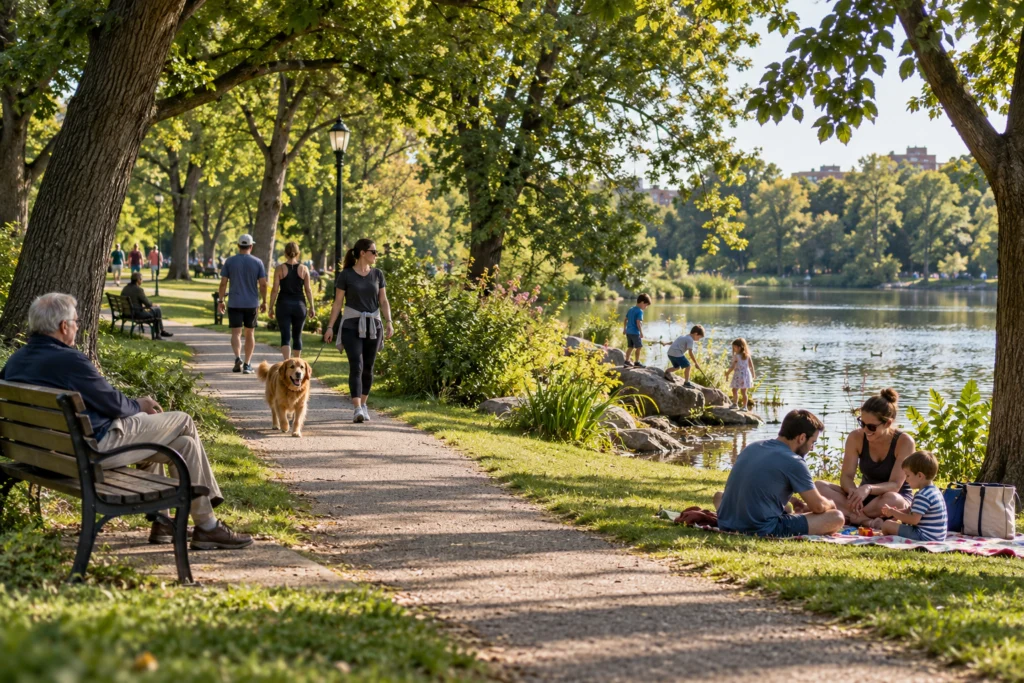
A public park is more than a destination for an occasional outing. It can provide nearby space for walking, play and informal social time. Its household value depends on access and usability, while its operation still requires maintenance and public decisions.
Distinguish access from a complete free outing
A park visit may involve no admission charge, but transport, food or a particular booked facility can still cost money. Verify the specific place and activity. Do not generalise one free element to every service on site.
Location matters. A nearby usable space may support frequent modest visits more easily than a distant attraction. Travel time and access needs belong in the analysis alongside visible charges.
| Dimension | Question | Why it matters |
|---|---|---|
| Proximity | Can the household reach it practically? | Affects frequency and travel cost |
| Facilities | What is currently available? | Determines whether the planned visit works |
| Maintenance | Are routes and spaces usable? | Access depends on ongoing care |
| Shared use | What rules and other users apply? | Keeps the space workable for everyone |
Use current official information
Toronto’s official directory links to parks, facilities, natural areas and service alerts. Similar local official resources can help verify a chosen place. Check closures and seasonal services before assuming a familiar route remains available.
A directory entry does not guarantee every access need is met. Ask specific questions where necessary and choose a manageable alternative if the planned visit would be difficult.
- Check the actual facility and current alerts.
- Include travel and optional purchases in the budget.
- Respect shared-space rules and other users.
- Choose a modest repeatable outing rather than constant novelty.
Keep the wider economics visible
A park’s value is not captured only by the cash a visitor spends. Shared space, proximity and the option to participate without buying a service can matter. Those benefits coexist with real costs of upkeep and choices about access.
Avoid inventing a monetary value for every social benefit. A clear description of who can use the space and what barriers remain may be more informative than a precise-looking but unsupported figure.
Questions and answers
Does public mean every activity is free?
No. Check the specific facility, programme or booking terms.
Is a distant large park always better value?
Not necessarily. Travel and practical access can make a nearby modest space more useful.
Can household spending alone measure a park’s value?
No. It misses shared access and other benefits, as well as the public cost of maintaining the space.
Sources: toronto.ca.